Do you know how it feels like to be a minority?
Do you know how it feels like to be a minority?

Psychological safety is the key for well-being, creativity, and productivity in the workplace. Only genuinely equal members of the team will feel well and be in the position to contribute to their full potential. Does your workplace recognize and foster diversity? This is a story that will help you do this.
Have you ever been a minority?
Jules Walter asks in his article “Diversity in Tech: The Unspoken Empathy Gap” if you have even briefly spent time in a place where you’re in the minority?
If you do that, you will get valuable insights and first-hand experience how it feels like to be in the minority. You will be more empathic towards all team members that may feel being an outsider for whatever reason, and you can start helping them, just like you probably had hoped for help when you were in that situation.
I’m a walking definition of majority
I have always been in the majority: a middle-aged white male, speaking the majority language in my country, heterosexual, right-handed, in a relatively homogeneous workplace, relatively well-off, and all in all quite privileged.
However, I had an occasion lately, where I felt to be completely excluded. I first didn’t really understand why I was feeling so bad about it, but Jules Walter’s article put this in context: I was a minority for a brief moment of time. To tell this story, we need to travel as far as to Honolulu.
Stepping up my surfing
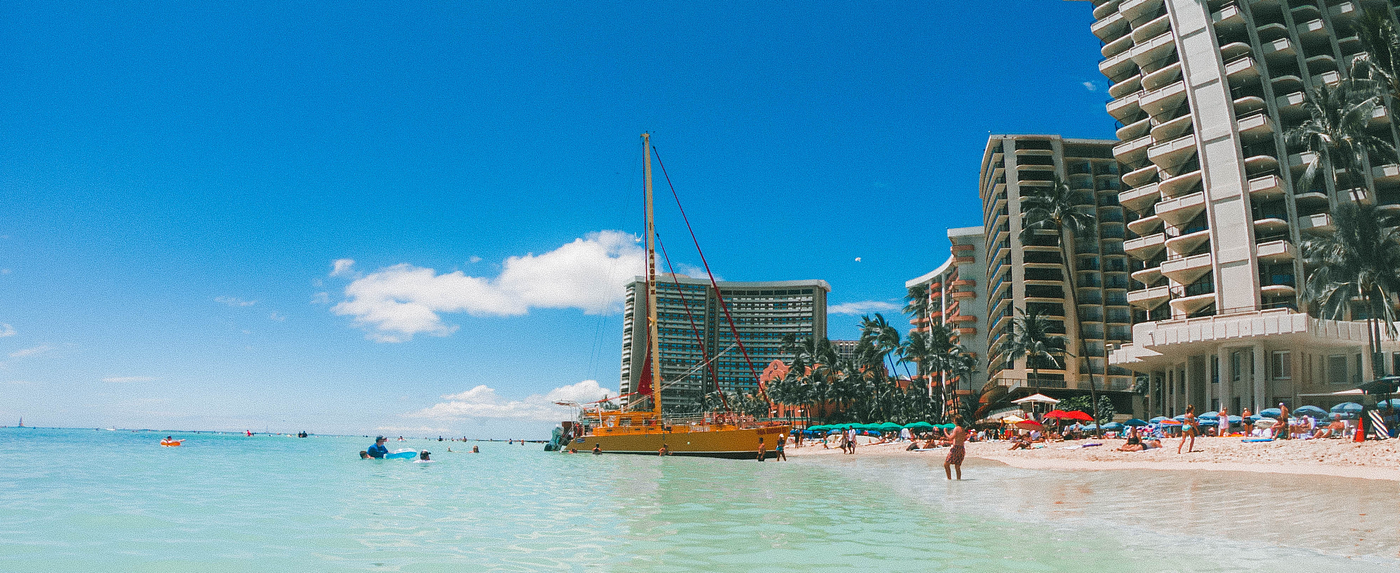
If you have ever tried surfing, you probably were taking a beginner lesson with a tutor near the shore. Catching the first waves is addictive: you balance on a board and gain speed as if pushed by an invisible force of nature. When you experience it once, you need to have more. The shore of Waikiki Beach, the birth place of surfing, is always packed with us tourists trying the surfing first time. There I was, with a happy bunch of beginners, trying our best, mostly falling over, bumping into each other, and having a blast.
I have taken a beginner tutorials quite a few times, so towards the end of the week I felt confident and decided that it was time to go and try to catch some bigger waves. I paddled further out and joined the line-up at the wave break.
Oh, they are yelling at me!
First I didn’t realize that the people out there by the reef at 6 am on a Saturday morning is a very different group compared to the normal tourist pandemonium near the shore. These were locals who had been surfing most of their lives. Surfers so far seemed to me as relaxed nice guys and gals with alohas and those hang loose shaka signs. But when they are out surfing, it is a completely different game.
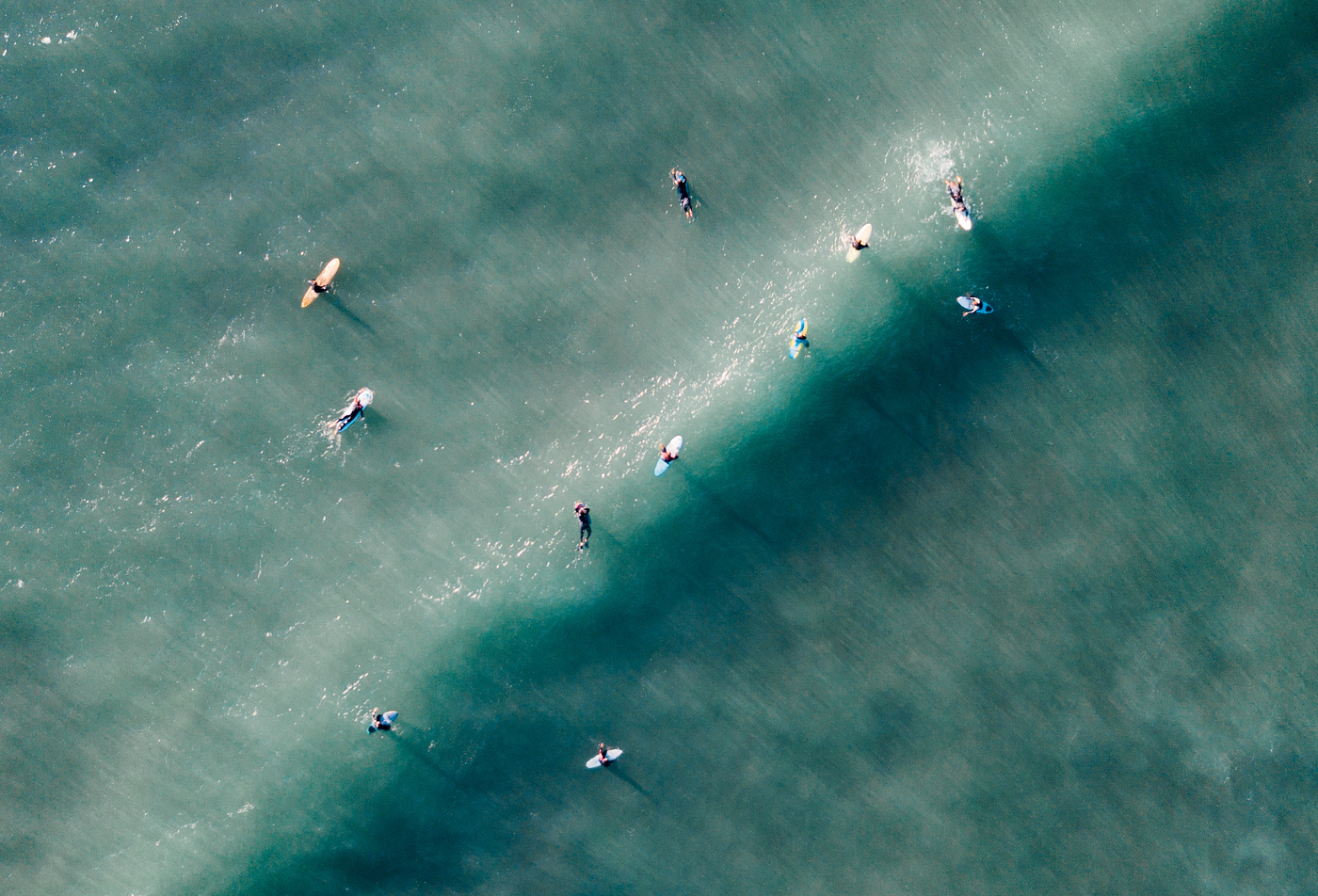
I reached the line-up — the group of surfers waiting for the next proper wave — with my oversized stable longboard and my noodle-arms already tired from paddling out.
This, and my skin resembling the color of skim milk gave me off. I just as well could have had “kook” (surf jargon for noob) tattooed on my forehead. I was obviously not one of them.
I tried to catch a couple of waves, and soon enough I heard yells like “Hey, that’s my wave!”, “Take your own wave!” or the efficiently blunt “Get out of here!” First I didn’t understand what my mistake was. I felt quite bad about it, because I don’t take being yelled at very lightly. I moved further out to the side and well below the line-up.
I was trying to figure out what was going on. Obviously, there was a queuing system, where people who arrived earlier may take the next wave. They “claim it” by clearly starting to paddle to catch one. All of this is not easy to spot first: the surfers are not in a neat line, but rather a big lump, and sometimes several surfers actually speed up to catch the same wave (but they know when to stop and let the priority surfer go first).
When I withdrew from the situation and stayed behind the pack, I was even further away from getting my turn with the waves. I had no idea what to do.
A kind word makes my day
At this point, one of the surfer girls (BTW about half of surfers there were women) shouted me: “Come on up!” with a relatively friendly voice. Although she probably mostly wanted to prevent me being on her way, this was still the first time someone acknowledged me and invited me in. I felt delighted about this small gesture almost up to tears, and paddled up and tried to fit in better.
Apart from this, nobody ever tried to tell me how the system works. I was on my own even when I was within the group and everyone certainly knew that I could have needed a bit of advice.
The majority bends the rules
After a while, I noticed that the turn-taking, which I thought was first-come-first-serve, was actually not so. The group of locals seemed to simply paddle back up after their wave and take a spot ahead of me in the line. I’m first to admit that I didn’t know the etiquette, but I also realized that when people see that I’m not one of them, they felt that it’s ok to bypass me in the line.
After following that for a while, I just thought “F*** it”, and paddled back to the shore.
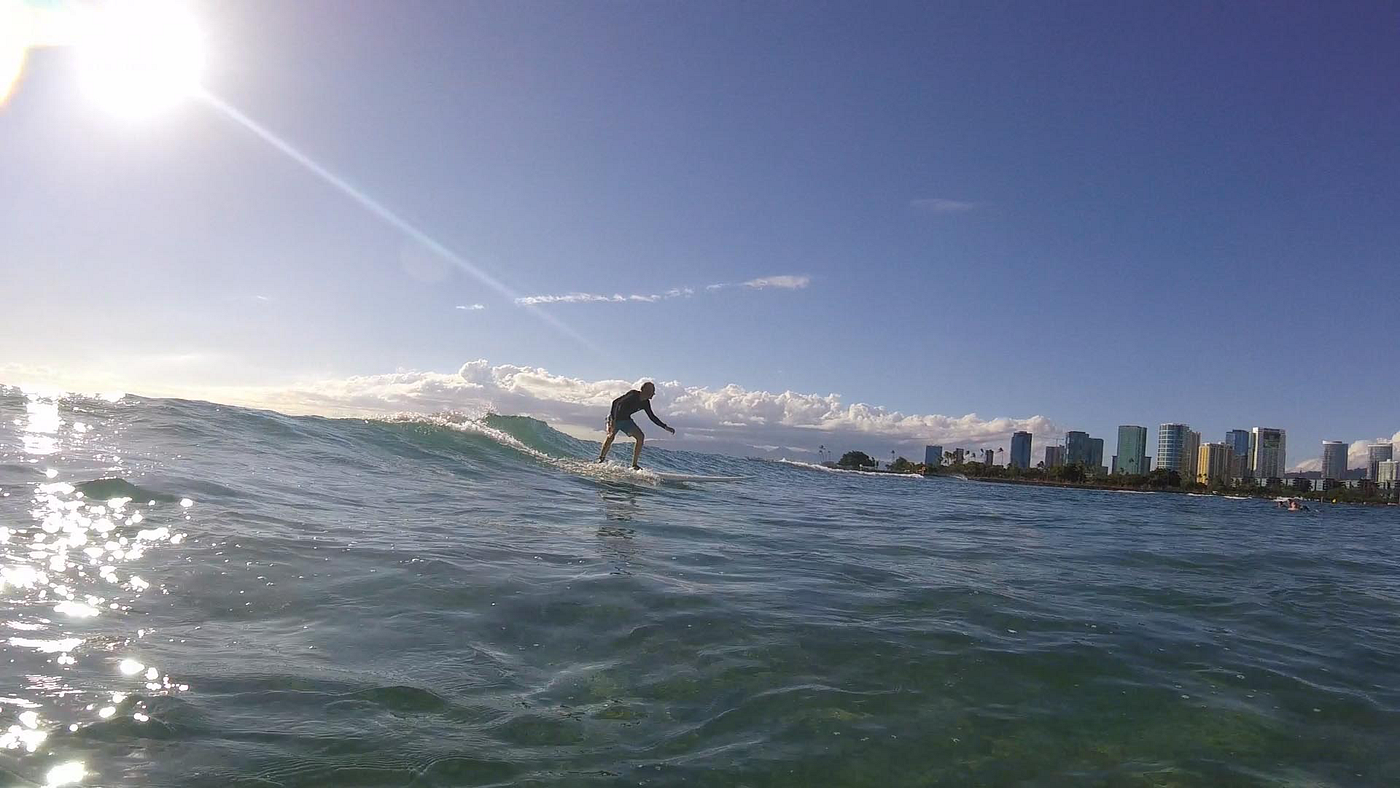
On the way back I eventually caught a very nice long wave that I was riding almost all the way to the shore, which made me feel a little better about the surf of that morning.
How does it feel to be an outsider?
I couldn’t shake off this episode from my mind during the next few days. I kept thinking through what happened and why I felt so bad about it. Of course, I understood that I had made mistakes, and now I’m confident that I know enough of the surf etiquette to go out again and behave a little better according to the norm there.
When back at the office, it was just a coincidence that I bumped into the article written by Jules Walter that I set off to read.
And then I realized that I had been in the minority.
In this short time, I had gone through the feelings of being out of place, being left out, being unaware of unspoken code. I withdrew from the situation, I was bluntly bypassed, and some people were simply rude to me.
This surfing experience lasted for only about two hours. What would happen if this would go on for years? Would I get used to it and become numb? Would my frustration simply grow over time? I cannot even imagine what kind of profound impact this would have in the long run to my psyche.
Now it’s your turn to be minority
I challenge you to try this: find a setting where you are an outsider, or look back at your recent experiences where you were excluded. Try to memorize what happened and especially how this made you feel.
You will be surprised how much this helps you to understand others in a similar situation. From there onwards you will recognize the signals of someone being left out. You will be more empathic, and you can start developing your own ideas on how to make your environment more inclusive for everyone.
Be fair and be kind
If there’s one easy takeaway for me, it is this: small kind gestures can be extremely valuable. A small acknowledgment, a friendly voice and an encouraging “Come on up!” can really save the day for someone.
Start being explicit about the unspoken rules and codes in your group. Pay special attention to people who potentially feel being in a minority or withdraw outside of the core group. Give support without patronizing, because everyone needs a fair chance. No more, no less.
Help them to get their turn in the line-up and see that they can have a go at their own wave. After that, they are on their own to experience a smooth ride or a spectacular wipe-out.
Just like all surfers do.