Everything a designer needs to know about business
Everything a designer needs to know about business
If you want to increase your impact as a designer in your company, you need to understand the fundamentals of business. It is a prerequisite to designing viable solutions in the intersection of people, technology, and business. In this post, I will present the simplest model of how business works. Learn this and you will be participating in boardroom discussions in no time.
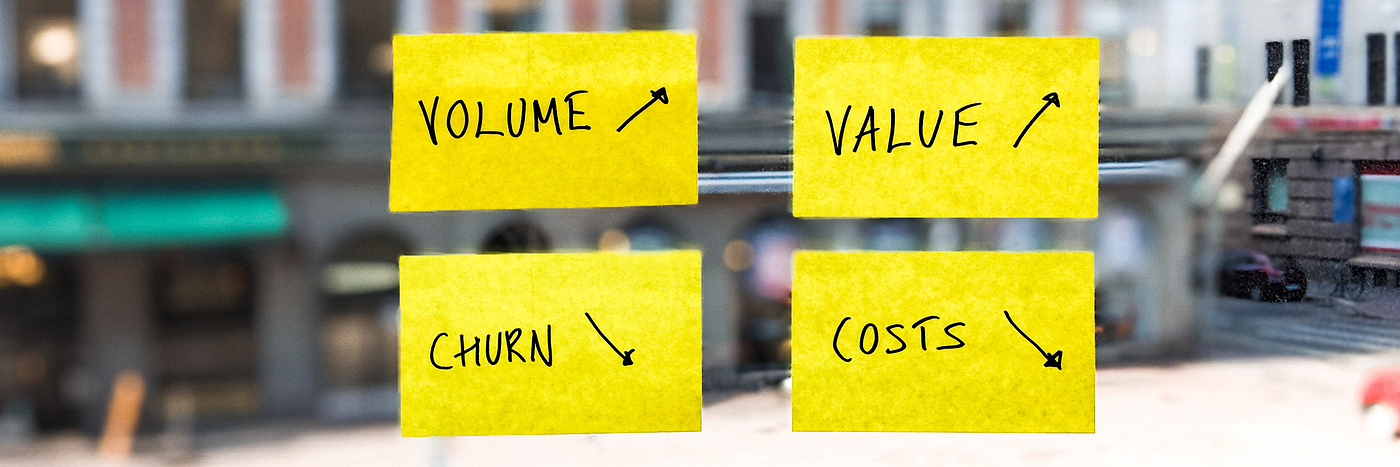
Business is very simple
Companies make their money by providing products and services to their paying customers. The more they have customers and the more the customers are willing to pay, the more the company has total revenue. When the revenue is bigger than the costs of delivering the product or service, the company is profitable. Business is very simple, isn’t it?
Well, in reality, quite the opposite. It’s extremely complicated when you take all the variables and dimensions into account. However, designers are masters of simplifying complex ideas, and this quest for simplicity is helpful when discussing business logic. Every now and then, it’s good to get back to basics: who are the customers, why are they interested in our products, what is the value they get, how much can we charge, and how do we ensure the profitability in the short and the long term?
How to make better business?
When companies recruit designers or hire design consultants, they expect this to be a good investment: the designers should make the companies more profitable in the long term. Here’s a short list of things how you as a designer can help the company’s bottom line:
- Gain more customers: when there are more paying customers, the company will have more revenue.
- Get more value: when each customer pays more, the company will have more revenue.
- Reduce churn: when the customers won’t leave, the company will have more paying customers.
- Decrease costs: when the company can reduce costs, it will be more profitable.
The company strategy usually identifies which of these areas are either current challenges or in which the company wants to do better with in the future. (If the strategy doesn’t include this, you should go and help to create one that does.) The strategy will give you a good indication which of the primary business targets above should be on the top of your priority list, too.
Now let’s look at each of these in more detail.
Design to gain more customers
First, we need to discuss, who the real customer is. In the business context, the customer is primarily the one who is paying for the product or service. Often the customers and the end-users are the same, but there are many businesses where this is not the case. A typical example is Facebook: the advertisers are Facebook’s paying customers. The end users are the people using the service for free. It is essential that the end-users are happy and frequent users of the service so that there’s a good audience that advertisers are willing to pay for.
The customer is the one that is paying for the service.
When we discuss gaining new customers, designers will have a lot of common interests with the marketing team. You both want to know what makes the customer tick: what their needs, motivations, and barriers are, what your value proposition should be, and what would be the best ways to convert prospects to customers. You share the same passion for branding and how it is presented in the communications and in the products.

Designers are very receptive to the nuances of customer needs and aspirations. They are solution-oriented and visualize how the products and services respond to these needs. You can design the touchpoints involved in the sales process: how the customers will purchase and sign-up to the service and how to make this process as smooth as possible.
Typical design topics for gaining new customers include
- customer research to understand customer motivations and barriers
- designing for different phases of the sales funnel, viewing analytics related to the current sales funnel
- improving and sharpening the value proposition, designing product structure and configurations
- designing purchase flows and onboarding, removing barriers for purchase, including sign-up, first use, and tutorials
- evaluating customer satisfaction, designing for peer recommendations, etc.
Design to get more value from your customers
If you ask for more money from your customers, you will increase your revenue — provided that your customers won’t leave you.

This is an area where designers excel. You can help the company truly understand its customers. You are equipped with the customer mindset and the qualitative methods to dig deep into the needs, motivations, and aspirations as well as potential concerns and barriers. You can help to formulate the value proposition that matches these needs. You can design elegant features that the customers need and desire, and thereby you increase the perceived value of your service. If, in addition, the customer experience is excellent, your company is in a good position to ask for a higher price for their product or service. Naturally, you need to have a long-term view: if you push customers too hard to pay more, you might drive them away.
Typical design topics for increasing customer value include:
- customer research to understand needs, motivations, desires, and priorities, analytics of current usage, customer segmentation, prioritizing use cases
- service design, customer journey mapping, designing primary customer use cases
- designing a lighthouse for future, planning feature roadmaps
- designing upgrade paths and up-sell/cross-sell
- wireframing, prototyping, usability testing, brand design, visual design, etc.
Design to reduce churn
When your company has invested in acquiring customers, you don’t want them to leave. Reducing churn is one of the most efficient ways of maintaining and increasing your customer base.
To avoid churn, you have to analyze and understand what keeps your customers loyal and what value you genuinely bring to them. If you fail in this, if your customers get a better offer from your competition, or if there is a breakdown in your service or customer satisfaction, they will leave, and you need to re-invest heavily if you want them to come back.
Typical design topics for decreasing customer churn include:
- customer satisfaction questionnaires, customer interviews, usability testing, analytics
- designing sticky consumer journeys, designing loyalty benefits
- designing delightful customer support, designing incident and complaint handling
- competitor analysis, wireframing, prototyping, visual design, etc.
Design to decrease costs
To make ends meet, delivering the products and services must cost less than what the customers are paying. If a company can radically lower the operating costs, it can provide the products and services cheaper than the competition and therefore have a competitive advantage.

Designers don’t usually have the cost reduction very high on their list of preferred tasks. They are typically more immersed in increasing customer value or customer acquisition. However, designing for cost reduction has one interesting aspect: it is typically very easy to measure and convert to monetary value. For example, by improving the usability of your product or service, you can decrease the number of costly support calls. Naturally, you need to keep an eye on these cost savings so that they will not start increasing the churn if customers find that they don’t get the support they need.
As a designer, you can also look at the costs that you create during the design. By paying attention to how the designers and design teams work in your company, you can eliminate excess design work, for example by using a common design language system and sharing the same design tools.
You can also have a big impact on the development costs of the designs you create. Sometimes it makes sense to make a small compromise in the design quality if the savings in the development time and effort are significant.
Typical design topics for decreasing customer-related costs include
- usability testing, design for ease-of-use for all touchpoints
- analysis of customer support usage, mapping support channels, designing digital and personal customer support, planning peer support and communities, content design, and authoring
- developer reviews, developing DesignOps for reducing design costs, etc.
Conclusions
The business managers that you work with will have much more knowledge of the details of the business mechanics than you. However, they may be so immersed in these complexities that it is often very sobering to have a designer to help to clarify for them what their business is all about: gaining more customers, bringing more value, keeping churn low, and decreasing costs.
Understanding the business logic helps you to concentrate your efforts where they make the biggest difference in your company. When you proactively do that, you will be an appreciated partner in the decision-making. This will open up pathways for you to make a profound impact in the company’s future.
When you inspire, direct and create designs that solve the biggest business challenges in your company, you will be the best investment that the company has ever made.